

Do you know how to dress for the mountains? Do you know what dressing in layers means? Why is this system used? Do you want to learn how to use it? Are you ready for the mountain cold? Do you want to be as prepared as possible?
If you have ever asked yourself any of these questions, you are in the right place, because in this blog we are going to talk about what dressing in layers consists of and why it is optimal for your outdoor adventures.
What is the layering system?
The layering system is a clothing strategy widely used in the mountains, trekking, hiking, skiing… It consists of using several stacked garments, each with a specific function, instead of relying on a single thick garment to protect you from the cold, moisture, or wind.
Some of the key ideas provided by the layering system are:
• It allows you to wick away sweat while keeping your body dry.
• It offers protection against rain, wind, or snow.
• It retains heat when it is cold, but also allows ventilation when you are exerting yourself.
• It is very versatile: you can add or remove layers depending on the temperature, humidity, wind, and level of physical activity.
The 3 layers of the system and their function
To properly understand how to dress in layers, it is useful to know the three traditional layers, from the one closest to the skin to the outermost, each has its specific function and, combined, they allow you to face almost any condition in the mountains.
Base layer: breathability and comfort
Why is it called the base layer?
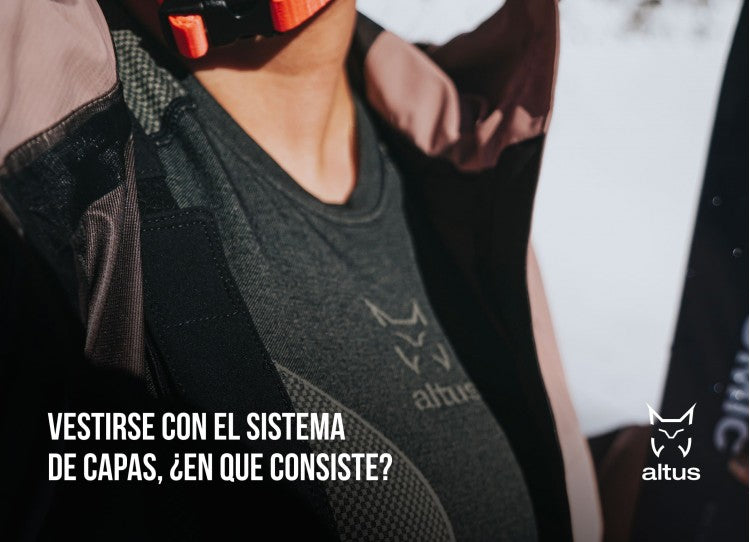
Because it is the garment that is in direct contact with the skin, not seen, but it is very noticeable: its job is to manage the moisture your body produces (sweat), keep your skin as dry as possible, and provide some thermal comfort depending on the conditions.
What should this layer provide in terms of performance?
• That it efficiently wicks away sweat to the outside, so it does not stick to your body.
• That it dries quickly.
• That it is not thick, to prevent you from losing mobility or it being heavy.
• That it is comfortable, soft, and does not irritate the skin.
These are some of the Altus products that can be used as a base layer:
• Horu
• Eiger
Mid layer: thermal insulation
The mid layer is the one that will provide warmth, it is placed over the base layer when the temperature drops and the cold bites, but you still do not need strong protection against rain or snow.
What type of garments make sense to use as a mid layer?
• Fleece jackets
• Insulated jackets
• Softshell
Which one you use will depend on how cold it is, how much effort you are going to make, etc.
In what situations can you use only a mid layer?
• When the conditions are not so extreme in terms of cold.
• In moderate activities, with frequent movements where you are generating heat.
These are some of the Altus products that can be used as a mid layer:
• Odyssey K30 or Seneca K30
• Decan J30 or Decan W J30 and ski softshell
• Karnac or Karnac W and Luxor or Luxor W
Outer layer: protection against wind and rain
The outer layer is the barrier between you and the world: wind, rain, snow, sudden changes in conditions, it is the one that must protect you when the weather gets complicated.
What garments are used as an outer layer and in what cases?
• Waterproof and breathable jackets
• Rain jackets
When to use it?
• If there is precipitation or risk of snow, heavy rain.
• If there is only wind/moderate cold without strong moisture.
These are some of the examples of Altus products that can be used as an outer layer
Advantages of dressing with the layering system
• Allows you to modularize your clothing according to the moment (ascents, descents, stops, wind, rain).
• Improves thermal efficiency: you retain only what you need, avoiding unnecessary sweat that cools you down.
• More lightness and versatility: instead of carrying a single huge garment, you carry several light ones that fulfill more functions.
• Greater overall comfort, fewer sudden changes in body temperature.

Tips for choosing garments in the layering system
• Check that the base layer is made of technical, breathable, and quick-drying material always avoiding cotton.
• In the mid layer, choose according to the level of cold, but consider that the volume and weight are reasonable for what you are going to do.
• The outer layer must have taped seams, an adjustable hood, a zipper closure that protects from wind/water; that it is waterproof and breathable.
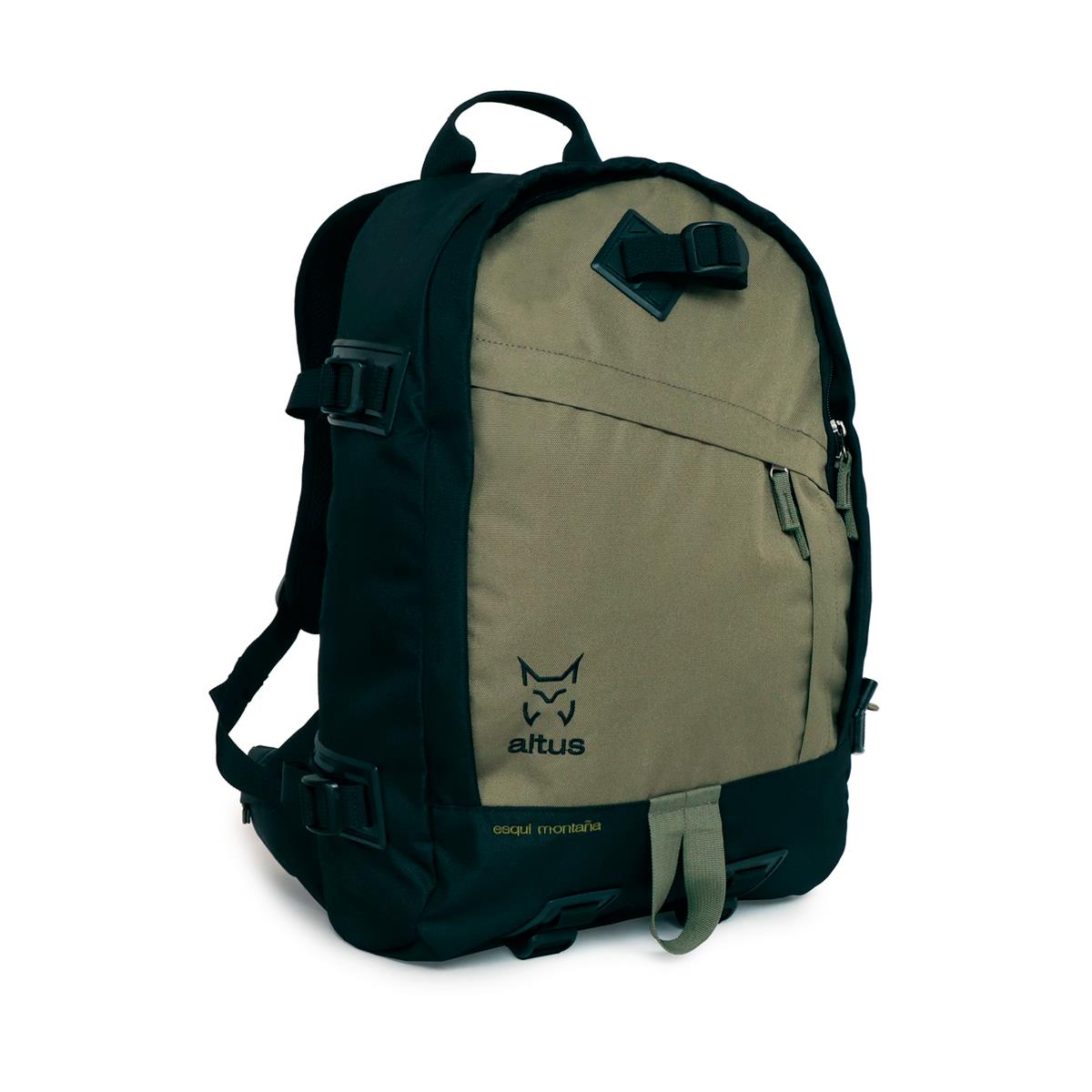
• Always carry in your backpack the layer that you probably will not use at a given time, because the weather changes quickly in the mountains.
Tip of the day: be like an onion: dress in layers, for activities where the temperature is going to vary (sunrise, steep ascent, stops, descents), it is vital to be able to add or remove layers easily.