

Are you already familiar with our essentials for this winter?
Still not sure why we call them “essentials”?
Are you clear on what makes a garment or accessory truly technical and not just an aesthetic choice?
At Altus, we are starting the year with a compilation of what you cannot do without this winter if you want to enjoy the mountains safely, comfortably, and with maximum performance. But it is not just about a list of products: we want you to learn how to choose what you need. Not to buy “just because,” but because you understand what features a good piece of technical equipment should offer and how this affects your performance in cold, wet, windy, or snowy conditions.
In this blog, you will find the keys to understanding technicality in winter gear, and you will discover our five essentials selected for their design, functionality, and reliability. Get ready to learn what makes a product work well… and why you should take it with you on your upcoming outings.
What makes a winter product technical?
The technicality of a winter product does not happen by chance. It is achieved by choosing the right materials and combining them with a design intended to offer the best performance in demanding conditions. Every fabric, membrane, or construction structure provides features that make the difference between feeling cold or staying insulated, between getting wet or staying dry, between walking uncomfortably or enjoying freedom of movement.
In the following sections, we explore all the key features that technical products can offer depending on how they have been designed.
Water resistance
For a product to be waterproof means that it has the ability to resist the entry of water from the outside to a certain extent. This resistance is measured through the water column, an indicator that shows how much water pressure a fabric can withstand before allowing water to penetrate inside.
The higher the water column, the greater the protection against heavy rain, snow, or splashes. This feature is essential in garments designed for changing or wet conditions, such as rain jackets, waterproof ponchos, or three-layer jackets, which combine waterproofing, breathability, and resistance in a single product.
Breathability
Breathability is the ability of a material to allow the moisture vapor generated by the body to escape to the outside. Why is it important? Because even in winter, trapped sweat can cool the skin, increase the sensation of dampness, and reduce thermal comfort.
A breathable product helps regulate body temperature during exercise, prevents the accumulation of sweat, and improves the experience in intense activities. Just as with waterproofing, breathability is measured in values that indicate how much vapor the fabric is capable of evacuating in a day.
You can find this feature in technical mountain t-shirts or pants, where a balance between protection and heat management is sought.
Thermal insulation
Thermal insulation is the ability of a garment to retain the heat generated by your body and prevent it from escaping to the outside. It is not about heating, but about maintaining the heat you already produce naturally.
Insulation can be achieved through different materials, such as synthetic fibers or down, and is present in insulated jackets, among others.
Knowing how to choose the right level of insulation is key to not feeling cold, but also to not overheating if you perform high-intensity activities.
Resistance and durability
Resistance and durability in winter products are based on the ability of the fabric and construction to withstand wear, abrasion, and friction.
It is essential for those who perform activities where the material suffers: winter trekking, ascents, ski touring, or hiking with a load. This feature is reinforced through dense fabrics, ripstop, reinforcements in critical areas, and high-performance sewing patterns.
You will find this feature in high-mountain jackets, technical pants, backpacks, pole ranges, and winter safety equipment.
Ergonomics and technical design
Ergonomics in winter products refers to the ability of a garment or accessory to adapt to the body and allow you to move freely. This includes articulated patterns, elastic fabrics, strategic reinforcements, and designs that respond to the dynamics of movement.
Good ergonomics means that you will not have to fight against the clothes, but rather that they will accompany your activity. It is indispensable in garments that require mobility, such as technical jackets, mountain pants, gloves, or backpacks with specific adjustment systems.
Weight and compressibility
Weight and compressibility determine how easily you can carry or store a garment or accessory. In winter, where every gram counts and the volume of the backpack increases, these characteristics become essential.
Compressibility is closely linked to the type of insulation:
• Synthetic fiber is less compressible and offers slightly lower insulation in relation to weight-volume.
• Down, on the other hand, is ultra-compressible and very warm, although less suitable in wet situations.
This feature is key in insulated jackets.
The 5 essential winter products from Altus
Below we apply all of the above to five products selected for their technicality and performance. Each one stands out for a specific combination of features that makes it an ideal ally for your winter adventures.

Canaima K30
Our flagship three-layer jacket, is a winter essential because it protects you from wind, rain, and snow in the most demanding moments. Its 15,000 mm water column guarantees reliable waterproofing, while the 15,000 g/m²/24h breathability ensures optimal vapor management in intense activities.
Its technical design makes it an ideal garment for long routes, ascents, ski touring, or mountain days where the weather can change quickly.
Tramontana
The Tramontana is our most versatile mountain pants to date, capable of working in both winter and summer. Its technical fabric offers an excellent combination of breathability, resistance, and ergonomics, allowing it to be used in very different activities without losing performance.
It is a garment designed for those looking for an all-year-round pants, with the durability necessary to withstand demanding routes and the comfort of a design adapted to movement.
Saioa K30
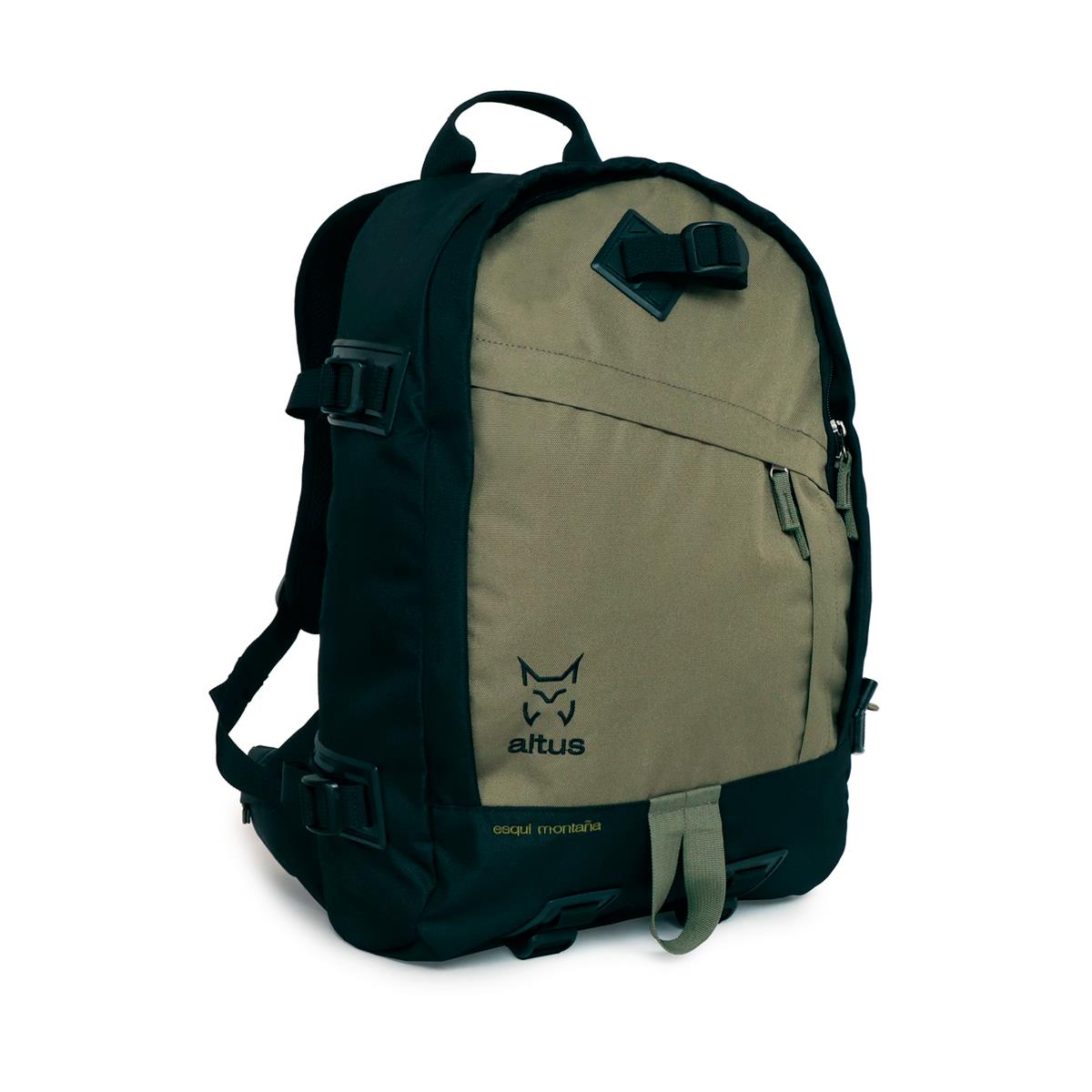
The Saioa K30 is our flagship ski backpack, designed so you can carry everything necessary on your snow outings. It adapts to different modalities thanks to its carrying systems:
• Side ski carrying with a front support strap and an adjustable strap.
• Diagonal front carrying, with an adjustable lower loop and an upper strap with a click buckle.
• Double-entry main compartment, both top and rear, to quickly access the gear.
Resistant, ergonomic, and with a technical design oriented towards safety and comfort in snowy terrain, it is an indispensable companion for your winter days.
Acebo H30
Choosing the Acebo H30 means betting on a resistant, adjustable pole designed to accompany you in snowy terrain. It is a lightweight but robust pole, with a reliable adjustment system and a grip designed to offer hold even with gloves.
One of the keys for winter is using the right basket, in this season you should opt for large baskets, which increase the support surface and prevent the pole from sinking too deep into soft snow. This improves balance, walking pace, and stability in winter terrain.
Posets Crampons
Posets crampons are an essential safety element in winter conditions. Their structure provides a firm grip on icy or snowy surfaces, reducing the risk of slips and improving stability with every step.
Choosing them means betting on a reliable tool that will allow you to move with confidence in winter terrain. Both for ascents as for ski touring or routes with icy areas, crampons are an element that should never be missing from your equipment when conditions require it