

Essential gear for your summer hiking routes
When summer arrives, the way you head into the mountains changes. Routes are longer, the heat sets in earlier, sun exposure is more noticeable, and your body needs gear that better supports you through every stretch of the journey. That is why preparing for a summer outing isn't about carrying more things, but about choosing exactly what you really need.
In hiking, the right gear doesn't just improve comfort. It also changes the way you walk, how you manage the heat, how you distribute weight, and how you respond when the route takes longer than expected. And that is where the right equipment makes a real difference.
In this post, we bring together the essentials for planning your summer hiking routes thoughtfully: backpack, hydration, sun protection, technical clothing, trekking poles, and basic safety gear. A guide designed to ensure your gear enhances the experience rather than becoming another obstacle halfway through the route.
The backpack: the starting point for any route
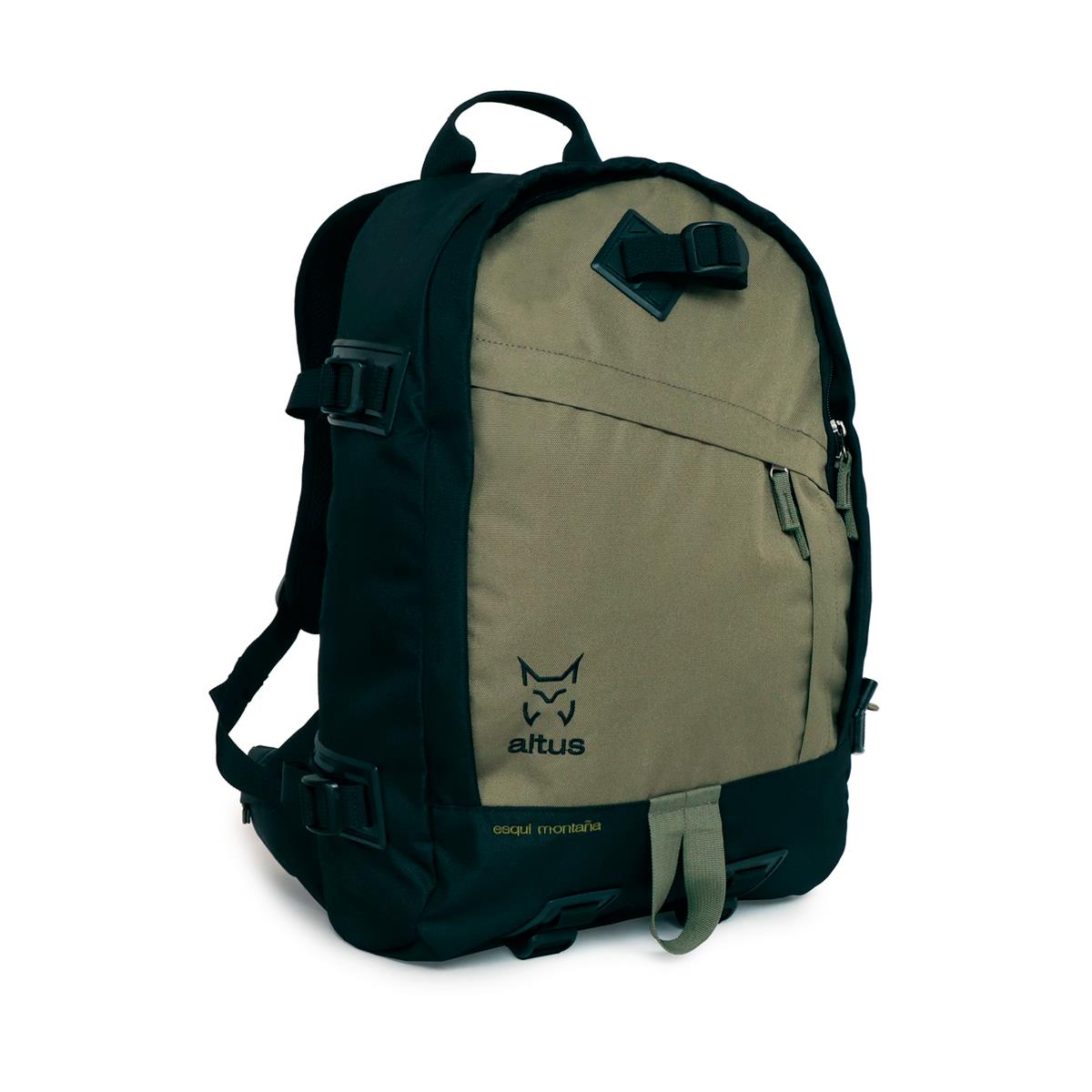
If there is one piece of gear that affects the entire outing, it is the backpack. Not only because it carries your equipment, but because it is crucial to your overall comfort. When a backpack fits well, ventilates properly, and has the right capacity, the route feels different. When it doesn't, you notice it quickly: more heat on your back, poorer weight distribution, and more fatigue than necessary.
In summer, this choice matters even more. High temperatures make a well-ventilated backpack with a back system that helps reduce the sensation of trapped heat highly valuable. That is why, rather than thinking only about liters, you should consider what kind of outing you are going to do and how you want to move during it.
Choosing the right capacity for your outing
The ideal capacity depends on the type of route. For short outings or day hikes where you want to keep things light, daypacks between 10 and 30 liters are usually a very logical choice. They allow you to carry the essentials without excess bulk and are ideal for routes where you don't need to carry a lot of gear.
When the outing requires a little more capacity, whether due to its length, elevation gain, or the need to carry more water, food, or extra layers, backpacks like the Pirineos 30, Pirineos 40 or even the Pirineos 50 make a lot of sense. Here, it is not just about capacity, but also how the backpack handles heavier loads and how the back system performs as the route gets longer.
The key is not to fill up every liter. It is to choose a hiking backpack that suits the type of experience you are going to have.
How to pack your gear for comfortable walking
It is not just about what you carry. How you pack it also matters a lot. A well-chosen backpack can feel worse if the contents are poorly distributed. And on a summer route, this is even more noticeable because any discomfort is amplified by the heat and the miles.
The logic here is simple: the heaviest items should be closest to your back; what you need during the route should be easily accessible; and secondary items should be lower down or further back. This organization helps distribute the load more evenly, stabilizes your movement, and makes walking feel more natural.
At the end of the day, a good backpack does not work on its own. It works well when it is also properly packed.
Hydration and protection from the heat
In summer, there are two things you should never improvise: water and sun exposure. You can choose the right backpack, clothing, or pace, but if you fail to stay hydrated or protect yourself from the heat, the experience will quickly change.
That is why, when we talk about hiking gear at this time of year, this category is no longer secondary—it is one of the foundations of your equipment. Staying well hydrated and protecting yourself from the heat are not extras. They are part of heading into the mountains thoughtfully.
How to carry water during a route
Every route requires a different approach to hydration. For simple outings or walks where you want something durable and easy to use, a Botter bottle works very well as a basic option. It is a clear, practical solution that is easy to integrate into your backpack.
When the goal is to optimize space or carry water more flexibly, options like the 2L flexible bladder or the J30 flexible bottle are excellent choices. Here, the format itself is not as important as ensuring your hydration is sorted from the start and not relying on figuring it out along the way.
In summer hiking, water cannot be an afterthought. It must be carefully planned before you start.
Sun protection and accessories for the hottest days
Sun protection is also part of your gear. And on many summer routes, more than it might seem. It is not just about avoiding overheating. It is about properly protecting your head, reducing direct exposure, and better managing the middle hours of the day when there is no shade or the terrain is demanding.
This is why accessories like the Borneo or Hawai make a lot of sense, as they help meet the need for protection without complicating the rest of your gear. The same goes for sunglasses, polarized or not, which can make a clear difference on long routes, in open areas, or on very bright terrain.
Alongside that, sunscreen remains one of those essentials you should never forget. In summer, protection is also something you wear.
Technical clothing for comfortable summer hiking
When it is hot, the right clothing makes a difference from the very first kilometer. Not because it needs to stand out, but because it supports you without getting in the way. And that is worth a lot on a hiking route.
This is where the logic of our Spring / Summer 2026 collection comes naturally into play. Many of the garments designed for this season were created precisely to meet this real outdoor need: to move with lightness, manage the heat more effectively, protect yourself from the sun, and respond well when the route changes.
If you want to learn more about that collection, it also makes sense to explore the SS26 blog, where we explain the overall concept and the features behind these garments in more detail.
Lightweight, breathable tops
For tops, the most important thing in summer is that the garment helps ventilate, supports your movement, and does not trap more heat than necessary. That is where shirts like the Tisma L30 and Eire L30 fit perfectly on summer routes. They are lightweight garments designed for activity and closely aligned with the idea of comfort when the sun and exertion begin to set in.
On this type of outing, your shirt should not be a distraction. It should let you keep walking comfortably.
Versatile bottoms to adapt to the route
Bottoms also significantly change the experience. Here, freedom of movement, terrain type, temperature, and the versatility required for each outing come into play.
On summer routes, options like the Taupo K30, Kauri K30 or Route L30 make a lot of sense because of their lightness and the comfort they provide when walking in the heat. And if you are looking for a garment that is more adaptable to your pace or changes along the route, the Quetzal convertible trousers reinforce that idea of practical versatility.
In hiking, clothing works best when it adapts to the route, not when it forces you to adapt to it.
Footwear suited to the terrain and type of route
If there is one thing that truly determines a route, it is your footwear. Not every outing requires the same thing. There are terrains where a sneaker makes more sense and others where a boot provides more security and support. That is why choosing correctly depends directly on the route, the elevation gain, the type of ground, and how you move in the mountains.
But it does not all depend on the footwear itself. Socks also significantly change the experience, especially in summer. In this regard, options like Caspio or Caribe, with Coolmax technology, make a lot of sense because of their breathability and how they help maintain a more comfortable feel when the heat sets in.
Sometimes, the difference between walking comfortably or not starts right there: with your feet.
Trekking poles and accessories that can make a difference
There are accessories that do not always seem essential on paper, but which can significantly change the experience on the route. Trekking poles are one of the best examples.
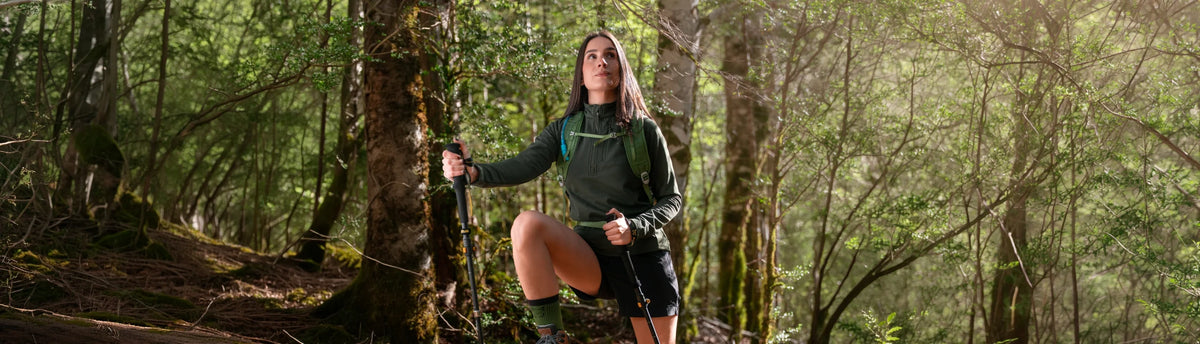
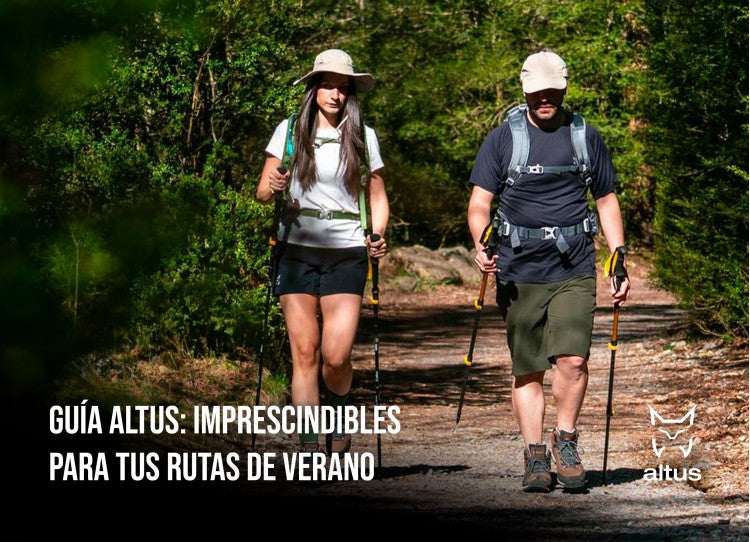
In hiking, especially when there is elevation gain, long descents, or sections where fatigue is already starting to set in, trekking poles help distribute effort more evenly, provide stability, and improve support on more technical terrain. They are not mandatory for everyone or every outing, but they can make a real difference on many routes.
In that sense, knowing when they are worth it is also part of understanding your gear better.
Basic safety equipment: the essentials you should always carry
There are things you should carry even when the route seems easy. Because basic safety does not depend only on the difficulty on paper, but on being prepared to respond if something changes.
On a hiking outing, that means not forgetting the bare minimum that should be part of your gear by default: some food or emergency rations, a small first-aid kit, an extra layer for the first and last hours of the day, and a reasonable expectation of what might happen during the route.
This is why products like the complete first-aid kit or the K30 survival kit make a lot of sense, not from an alarmist perspective, but from something much simpler: heading out better prepared. In the mountains, basic gear is not always used, but when it is needed, you really notice the difference.
Altus Checklist: check your gear before starting the route
Before heading out, a quick check can prevent many mistakes. Especially in summer. That is why this final checklist works well as a practical reminder before starting any route:
- check the weather before heading out
- make sure your hydration is sorted before you leave
- choose footwear suited to the terrain
- protect yourself from the sun with a cap or hat, sunglasses, and sunscreen
- carry the essentials: food, water, and a first-aid kit
- always bring an extra layer for the first and last hour of the day
- adjust your backpack to the type of outing and do not carry more than necessary
At the end of the day, preparing a summer hiking route properly means heading out with the essentials clearly planned so that, once you start walking, you can focus on the experience. And if you want to see it all from a more complete product perspective, it makes a lot of sense to keep exploring the Spring / Summer 2026 collection and the SS26 blog, where this entire approach is understood even better.